Menu customization
The problem
A $100M opportunity in the restaurant vertical was on the line. Square was losing restaurant deals to competitors, and user research made it clear: restaurant owners felt Square wasn’t built for restaurants.
The key reason? Restaurants needed better item customization. We offered item modifiers, but they lacked core functionality.
As is, Modifiers were binary—on or off. We also needed to support ordering a specific quantity of a modifier.
Restaurants with complex menus were either going without, or building messy workarounds. On a competitor’s platform, building a box of a dozen donuts only required one modifier set. On Square, it took twelve. And every time you updated your flavors, you had to update every. single. one.
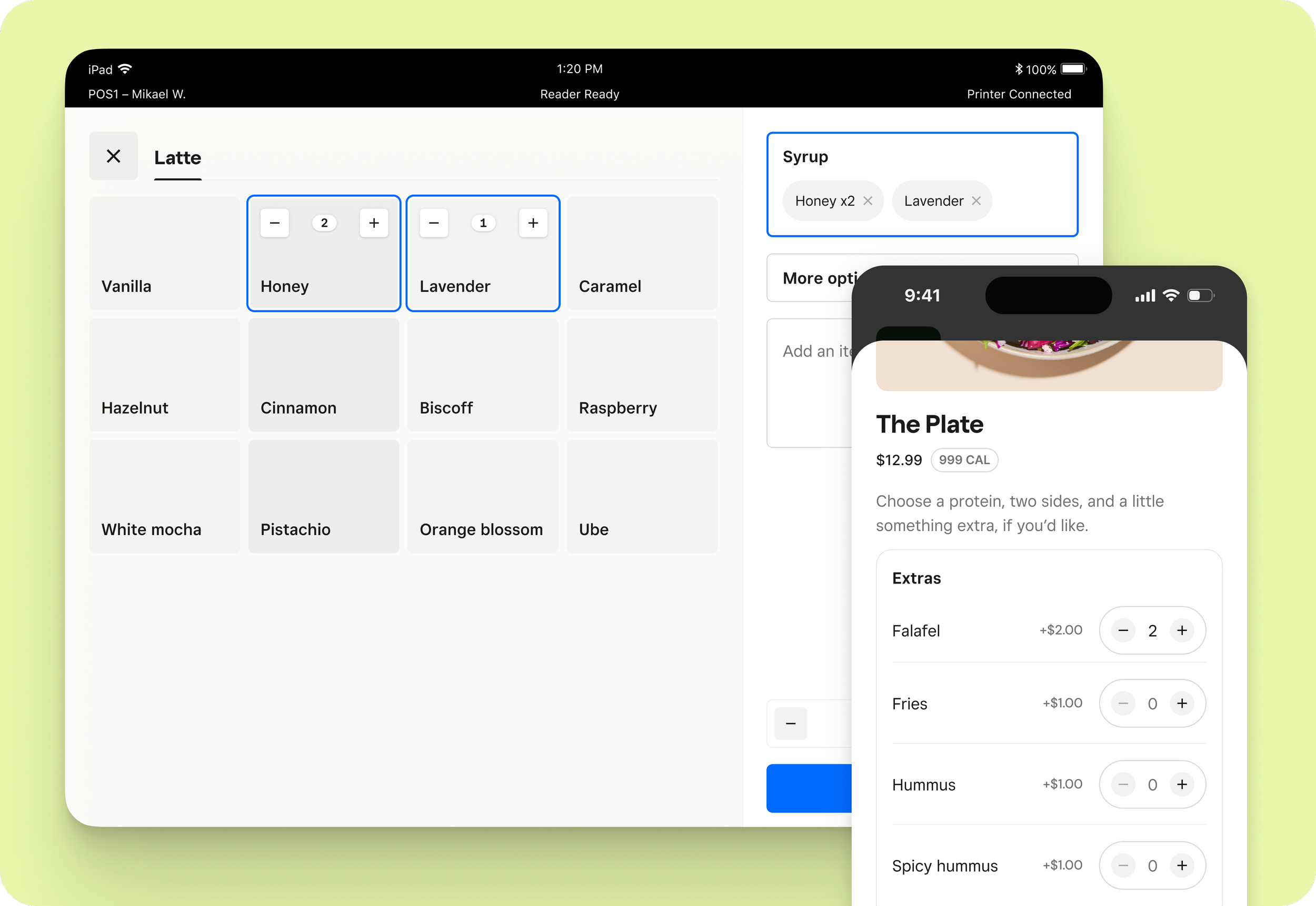
Shipped modifier quantity ordering UI on the Square Point of Sale and Square Websites
Discovery
First, a user research study was kicked off with two goals:
Understand the jobs of modifiers for restaurants through their entire workflow – menu setup, ordering, order preparation, inventory, and reporting.
Understand where we’re falling short today.
I worked with my product partner, engineering manager, and a user researcher to deliver an in-depth analysis of user needs around modifiers.
In parallel, I dove into system mapping from a seller’s POV. I needed to understand how the existing modifier controls impacted modifiers across the entire Square ecosystem, including:
Menu setup & editing
Ordering via the Point of Sale, kiosks, websites, and third parties integrations
Kitchen prep - kitchen tickets, kitchen display systems
Inventory management
Reporting
I also partnered closely with engineering to understand how modifiers were structured in the backend, and how that impacted what we could or couldn’t deliver, and scope.
We’re going to need a bigger scope
System mapping exposed a hairy UI problem: modifier settings were split across two pages with no clear logic, and adding quantity controls on top would make it worse.
I advocated to leadership that we needed to fix the underlying experience alongside the new feature, or risk eroding trust with the exact vertical we were trying to win. The scope expanded.
The solution
Restructured modifier settings to match how sellers actually think: one page for defaults, one for per-item overrides, with a clear relationship between them.
Designed new min/max controls that adapted their logic based on whether quantities were enabled, keeping the simple case simple while supporting the complex one.
Adding modifier quantities didn’t require the users to learn a new system or lose features they were used to, and as an added bonus they had improved control over their modifier sets.
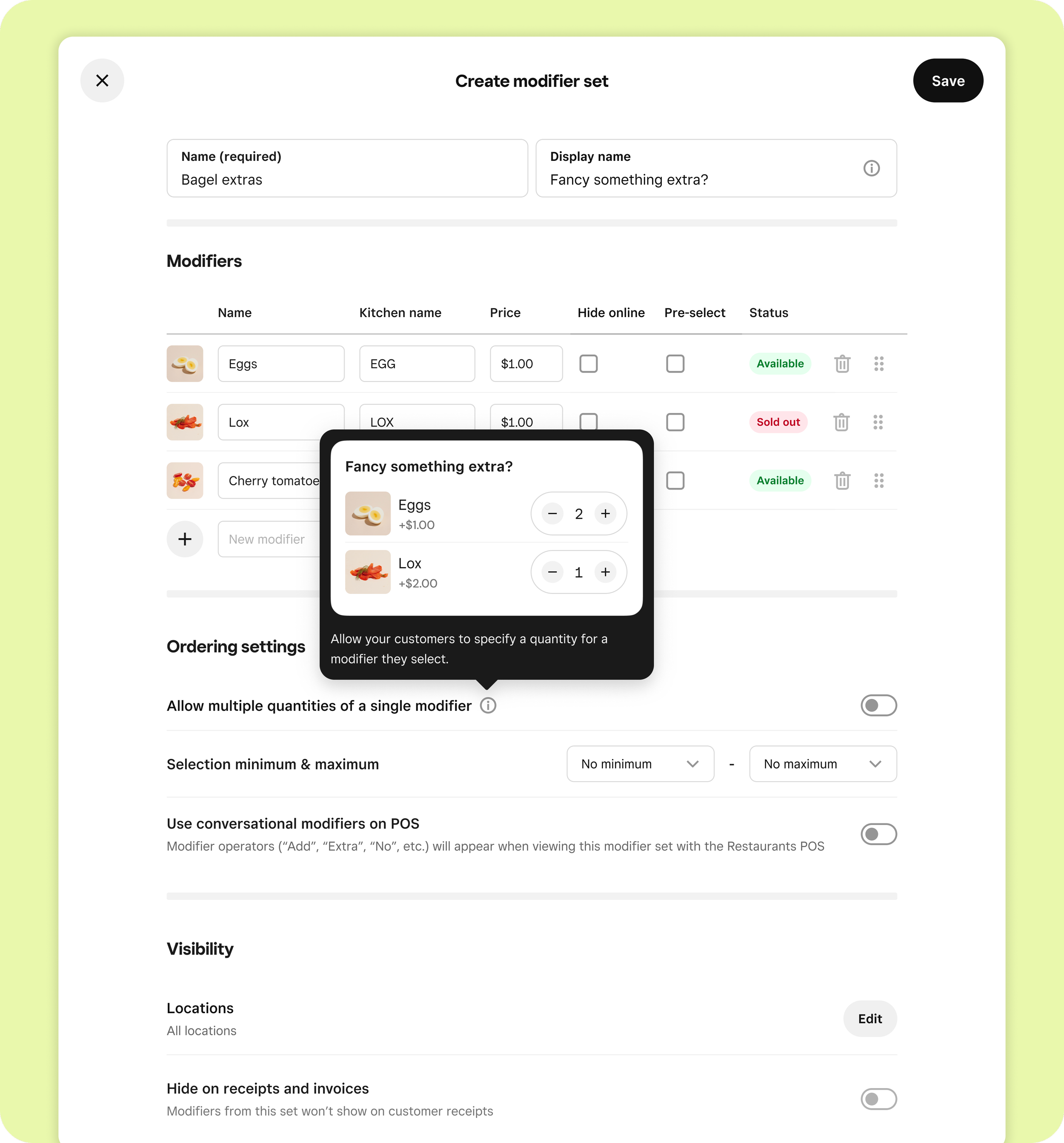
The Create/Edit modifier set page after this project
The impact
A $17M seller that was about to churn saw an early demo, called it “even better than expected,” stayed, and became our first beta tester.
The updates were featured in Square’s inaugural product releases event.
Sellers cleaned up their catalogs, deleting duplicate workaround modifier sets.
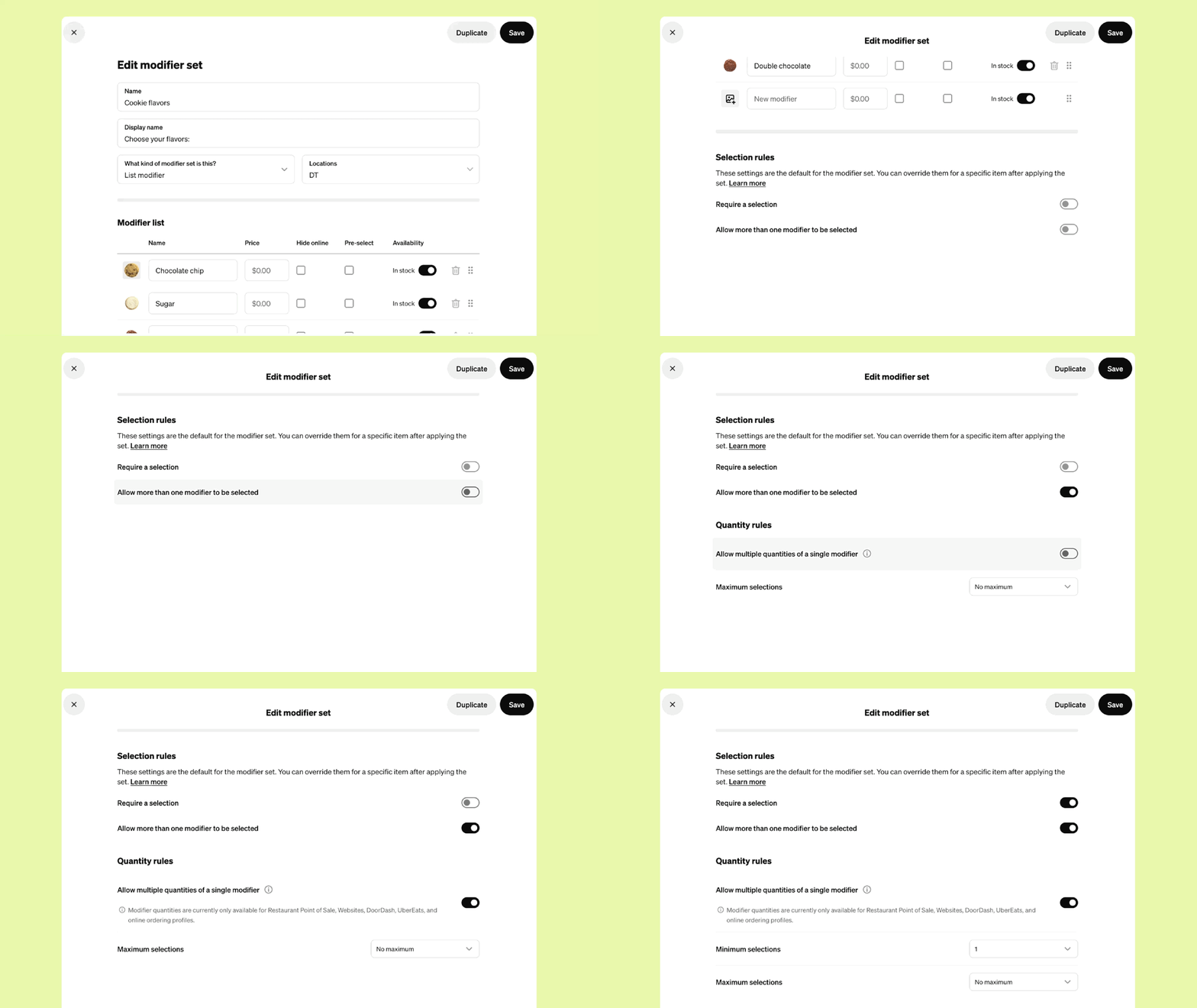
Progressive disclosure used to display increasing complexity only when needed.
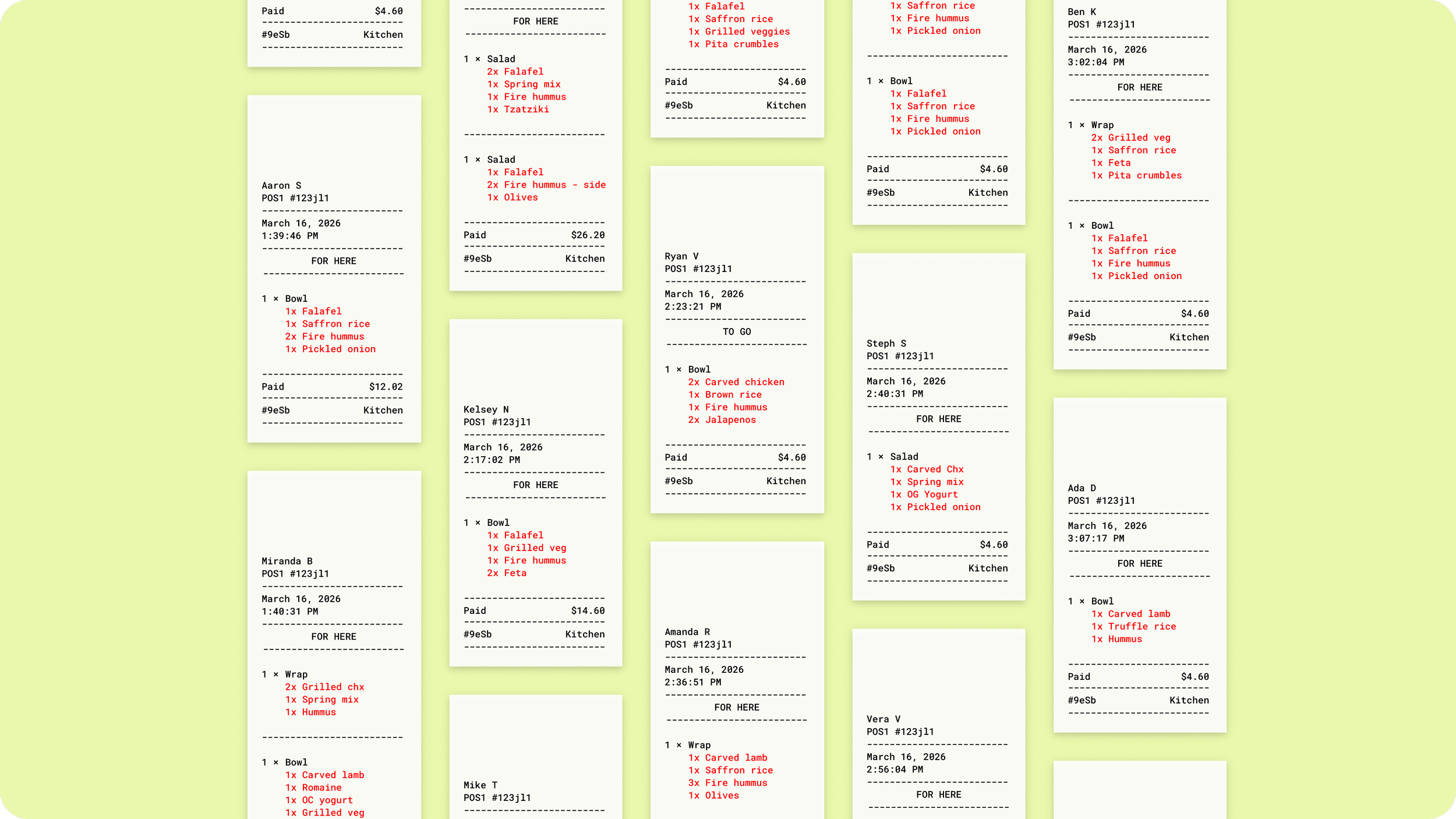
Kitchen tickets using modifier quantities